Lunge
Lunges
Alternating leg work with torso control. Carries over to walking, running and stairs better than the squat does.
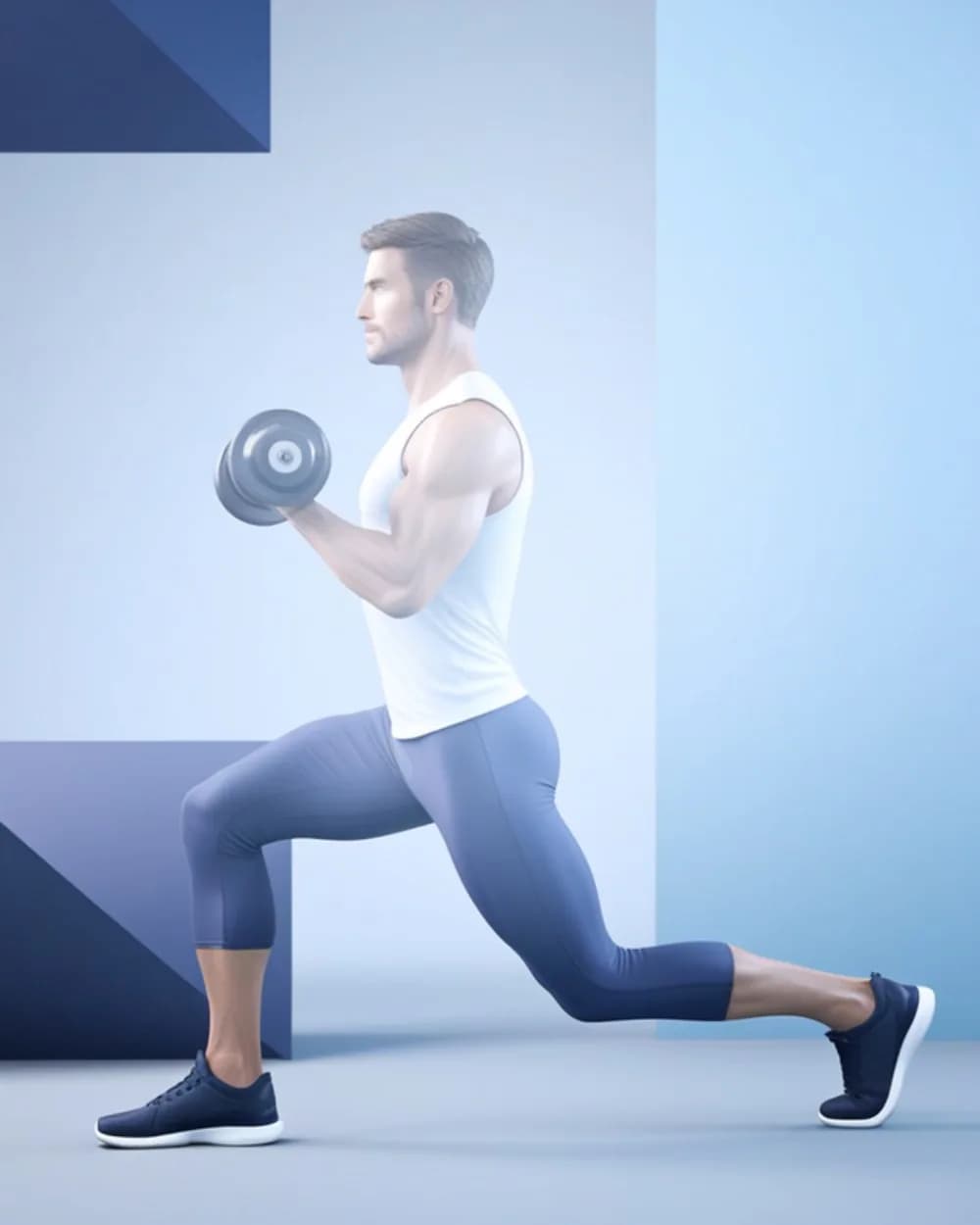
Lunge · Beginner
Lunges
Dumbbells · Bodyweight · Barbell · AI visualisation, illustrative only
- Equipment
- Dumbbells, Bodyweight, Barbell
- Level
- Beginner
- Primary muscles
- Quadriceps, Gluteus maximus
- Secondary muscles
- Hamstrings, Calves, Hip stabilisers
- Working range
- 8–12 reps · RIR 2
Step by step
- 1Stand tall, dumbbells at your sides or hands on hips.
- 2Step forward far enough that at the bottom both knees form right angles.
- 3Descend straight down — the rear knee almost touches the floor.
- 4Keep the torso upright; do not lean over the front leg.
- 5Push back through the front foot and return to standing, or walk into the next step.
What makes the biggest difference
- Move down, not forward.
- Eyes ahead, not on your feet.
Common mistakes
Step too short
The front knee shoots past the toes and all the load lands on the kneecap. Lengthen the step.
Front knee caves inward
A sign of weak hip stabilisers. Reduce the load and consciously track the knee over the second toe.
What to do instead
Knee pain in deep flexion
Reverse lunge
Stepping backwards produces lower shear forces at the knee than stepping forwards.
Contraindications
- A recent knee ligament injury — return only after clearance.
- Balance disorders — train with support nearby.
This is not medical advice. If any of these apply to you, or the exercise causes pain, talk to a doctor or physiotherapist before returning to training.
Similar exercises
Log your sets and watch the progression
You enter weight, reps and RIR — the app computes your estimated 1RM, plots the strength curve and suggests the next session’s load along with the reasoning.
Sign-ups coming soon